Start with where the evening actually happens
Most summer weddings in Qatar move through three environments in a single night: a car, a cooled ballroom, and a short walk somewhere between the two. The dress has to work in all three. Cloth that feels weightless under the atelier’s air conditioning can turn heavy and slow the moment it meets the humidity of a hotel forecourt in July.
So the first question we ask is never “what silhouette do you want” — it is “where is the wedding, and how much of the night is outside?” An indoor ballroom in West Bay allows fabrics that a garden reception in Al Khor simply will not forgive.
The fabrics we reach for first
- Silk crêpe — matte, fluid and quietly forgiving. It skims the body instead of clinging to it, falls in a long unbroken line, and reads as expensive in photographs without shine. Our most-requested cloth for evening.
- Silk georgette and chiffon — the lightest options we make full gowns from. Layered over a fine lining they move with the smallest current of air, which is exactly what you want when you are standing still for an hour of greetings.
- Organza — structure without weight. It gives a sleeve or a skirt real presence while staying open enough for air to pass through. Champagne organza over a matching lining is one of the coolest formal looks we build.
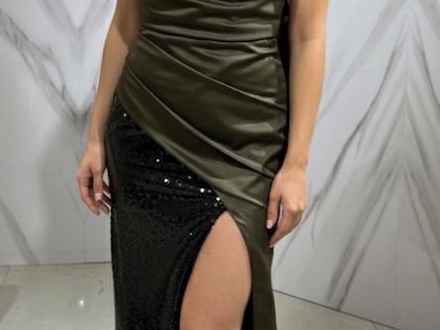
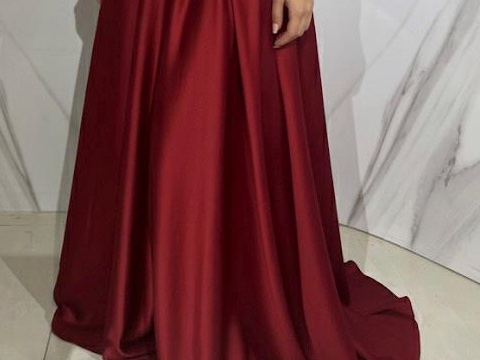
- Fine mikado or duchess satin — for a bride who wants sculpture rather than drape. Warmer to wear, so we keep it to sleeveless or short-sleeved shapes and line it in silk, never polyester.
- Tulle — volume for almost no heat. Three layers of fine silk tulle weigh less than one layer of lined satin, which is why so many summer skirts in the atelier are built this way.
What we steer away from in high summer
Velvet, heavy brocade, bonded jacquard and full polyester linings all trap heat. They are beautiful from November onwards, and we make a great deal of velvet for henna nights in winter — but in July they turn a two-hour reception into an endurance test. If you love one of them, we will use it as an accent: a bodice panel, a cuff, a belt, rather than the whole dress.
Lining is half the comfort
Clients often choose the outer cloth with great care and then let the lining be whatever is in stock. That is the wrong way round. The lining is the layer touching your skin all night. We line summer gowns in cotton voile or silk habotai — both breathe, both move, and both cost a little more than the acetate most workshops use. It is the single change that makes the biggest difference to how a dress feels at midnight.
Beading changes the weight more than you expect
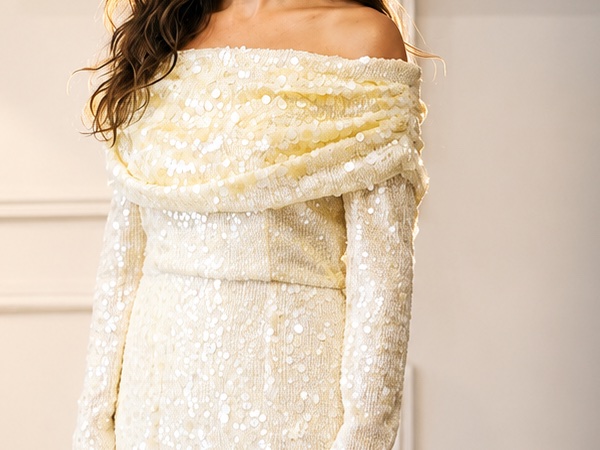
Hand-beading is added weight and added warmth, and it concentrates in whichever area it covers. A fully beaded bodice on a crêpe skirt is comfortable; a fully beaded gown in July is not. Where a client wants a great deal of surface work for a summer date, we place it high — shoulder, neckline, cuff — and let the body of the dress stay plain and moving.
A summer dress is judged at the end of the night, not at the first photograph.
Colour behaves differently under ballroom light
Hall lighting in Doha runs warm, and warm light flatters champagne, ivory, blush, bronze and every shade of gold. It also drains cool pastels — a soft lilac or an icy mint that looked beautiful in daylight can read grey in photographs. When a client is set on a cool colour, we choose a version with a warm undertone and check it under the atelier’s evening lamp before cutting.
Send us a photograph of the venue
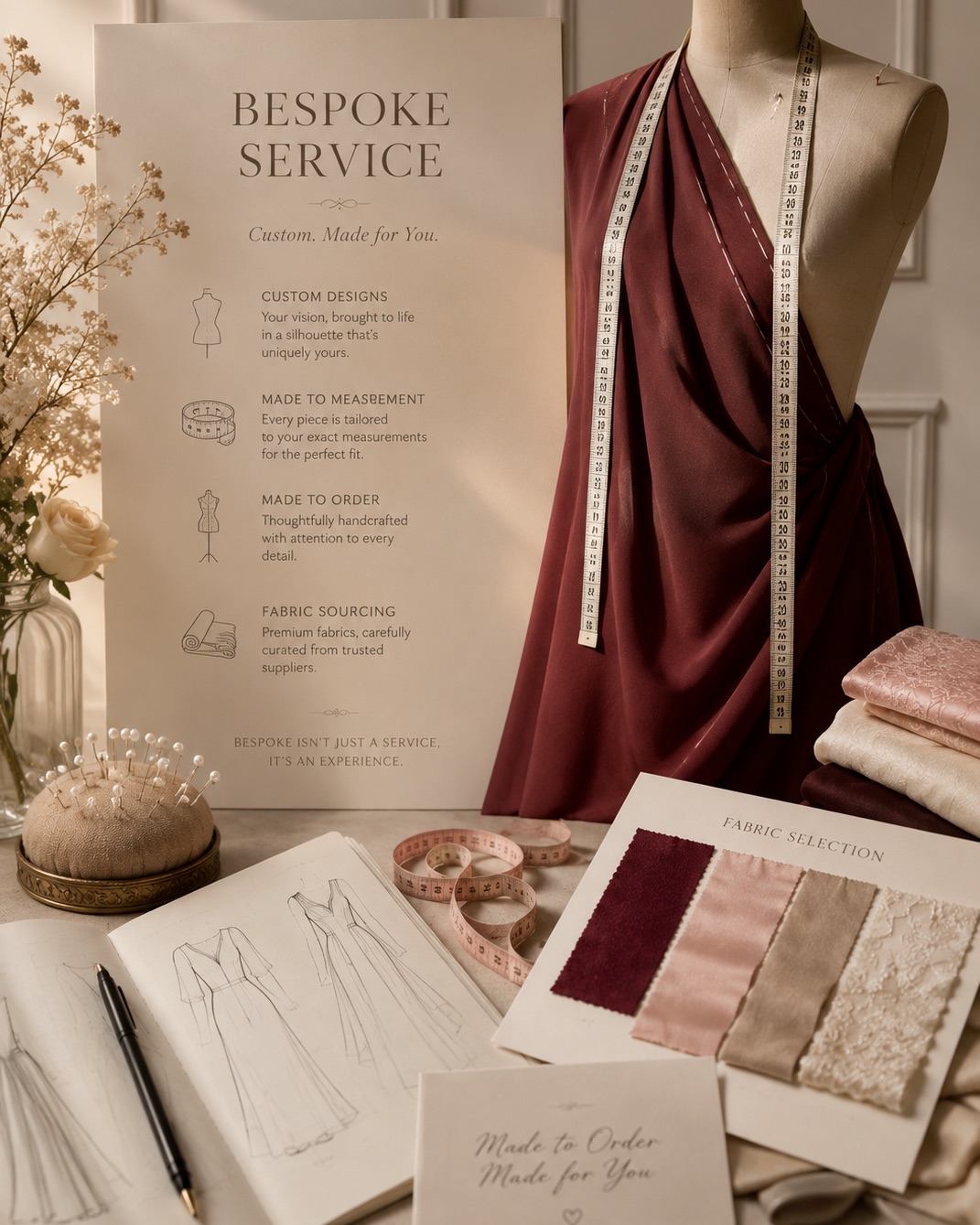
It is the most useful thing you can bring to a first conversation. One picture of the hall, the date, and whether the reception spills outdoors tells us more about the right fabric than any inspiration folder. Send it on WhatsApp and we will come back with two or three cloths worth seeing in person.